Pillar GuideSuper Duty Shopping • Western NC & Upstate SC
Ford F-250 vs F-350 vs F-450: A Complete Super Duty Buyer’s Guide for Western North Carolina & Upstate South Carolina
Choosing a Ford Super Duty is not just about trim level or color. In Western North Carolina and Upstate South Carolina—where steep grades, heavy towing, farm work, construction, and outdoor recreation are everyday realities—the difference between an F-250, F-350, and F-450 can directly impact stability, braking confidence, durability, and long-term satisfaction.
The question we hear every day at Stott’s Ford: “Which Super Duty do I actually need?”
This guide answers that clearly—so you can choose the right truck the first time, whether you’re towing an RV through the mountains, hauling equipment, or building a work fleet.
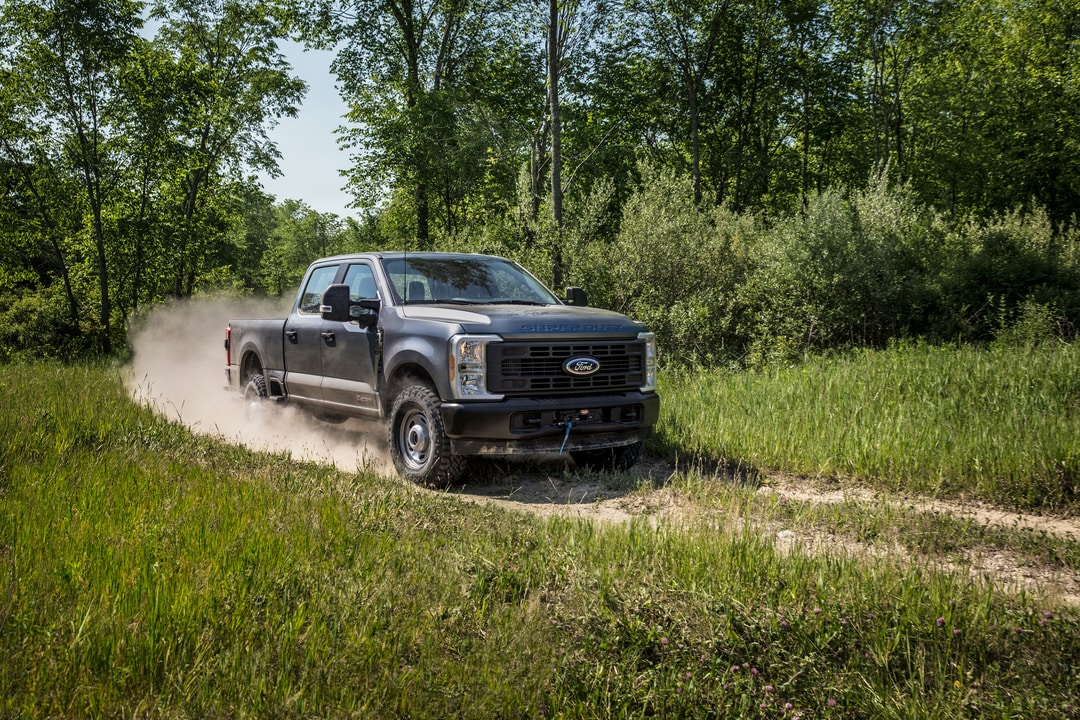
Why Super Duty Shopping Is Different Than F-150 Shopping
A Super Duty purchase is a capability decision first—and a comfort or style decision second. Super Duty trucks are engineered to handle heavy trailers, high payload, commercial use, and demanding duty cycles. That means small configuration choices can make a big difference: cab size, bed length, engine, axle ratio, rear wheel setup, hitch type, wheel/tire packages, and even certain option groups.
In other words: you’re not just picking a “truck.” You’re selecting the right tool for your job, your terrain, and your future. Buyers in our area feel that more quickly because mountain grades, winding roads, and longer descents reveal stability and braking differences that can be masked on flat highways.
Local reality check: A truck that “can tow it” on paper may still feel uncomfortable on a steep grade if your payload is tight or your trailer’s weight transfer is high.
Best practice: Shop from your real use-case: trailer type + loaded weights + passenger/cargo + terrain + frequency.
The 3 Questions That Decide F-250 vs F-350 vs F-450
Most shoppers start with “towing capacity.” That’s understandable—but for many buyers, towing is not what forces the decision. Instead, the three questions below usually determine whether you should be looking at an F-250, an F-350, or stepping up to an F-450:
- How heavy is your trailer when it’s truly loaded? (Not brochure weight—real “trip-ready” or “work-ready” weight.)
- How much weight will transfer onto the truck? Tongue weight (bumper pull) or pin weight (fifth-wheel/gooseneck).
- How often do you tow or haul heavy in mountain terrain? Frequency matters—so does how far and how steep.
Answer those three questions honestly and the right Super Duty class becomes clearer. If you’re unsure, Stott’s Ford can help you work through a simple worksheet—because guessing is expensive in heavy-duty ownership.
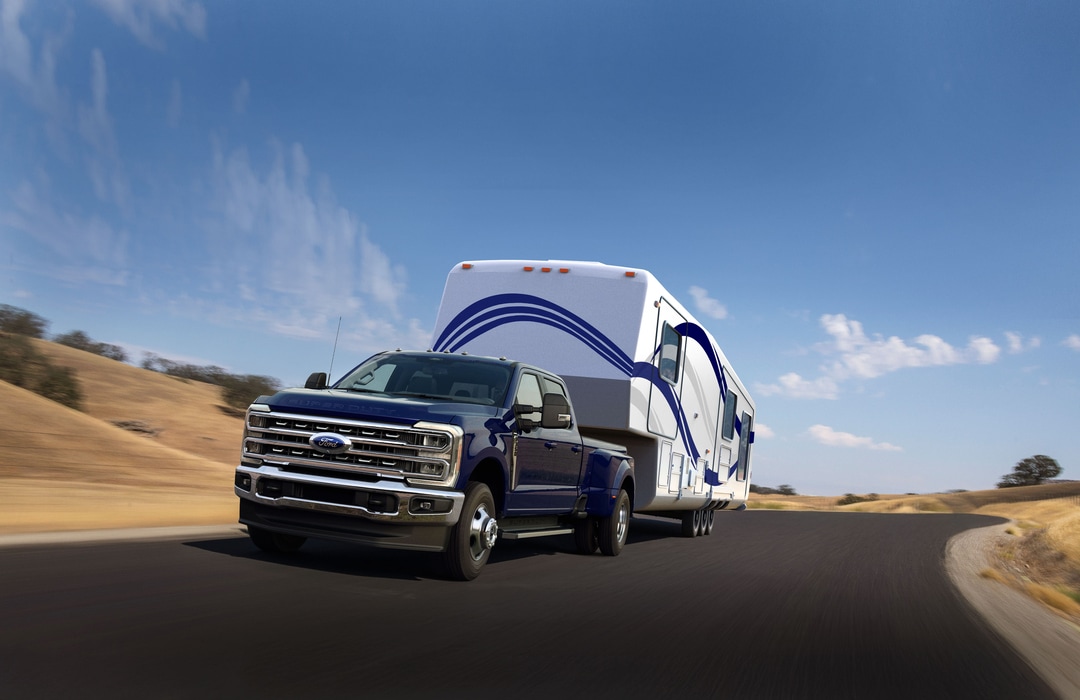
Payload vs Towing: The Most Misunderstood Numbers in Super Duty Shopping
If you remember one section from this guide, make it this one: payload often matters more than max towing capacity. Many buyers can stay under a towing rating and still overload the truck because payload includes everything on the truck—including the part of the trailer that presses down on it.
What “payload” includes
- Driver and passengers
- Fuel
- Tools, cargo, equipment in the cab or bed
- Aftermarket additions (toolboxes, winches, bumpers, bed covers, etc.)
- Tongue weight from a bumper-pull trailer
- Pin weight from a fifth-wheel or gooseneck trailer
Why weight transfer changes the conversation
When you tow, a percentage of your trailer’s weight transfers to the truck. With bumper-pull setups, that’s tongue weight. With fifth-wheel and gooseneck, that’s pin weight—and it can be substantial. Add passengers and cargo, and the truck can run out of payload before it runs out of “towing.” That’s why many fifth-wheel owners end up in an F-350 (often DRW) even if the trailer’s advertised weight doesn’t look extreme.
Practical takeaway: If you’re shopping for a fifth-wheel or planning to upgrade to one, payload margin becomes your friend—especially on grades.
A quick example (how payload disappears)
Imagine you have four adults in the cab, a cooler and luggage, a toolbox in the bed, and a trailer that transfers meaningful weight to the truck. Nothing about that sounds extreme, but the combined weight can use up payload quickly—especially with heavier trims and options. That’s why we encourage shoppers to think in “real trip” terms rather than “empty truck” terms.

Engines & Drivetrains: Choosing Gas vs Diesel for Your Use
The “right” Super Duty model is only half the decision. The powertrain—especially gas vs diesel—shapes your towing experience, long-term costs, and how the truck behaves on grades. While exact horsepower and torque numbers vary by model year and configuration, the decision framework below holds steady for most buyers.
When gas can be the smarter choice
- You tow occasionally or at moderate weights
- Your trips are shorter and you value simpler maintenance
- You want strong capability without the diesel ownership trade-offs
When diesel tends to shine (especially in the mountains)
- You tow heavy frequently or for long distances
- You want stronger pulling confidence on grades
- You value relaxed towing performance under load
Local note: In mountain towing, buyers often prefer setups that feel composed on long pulls and descents. Your “frequency” and “heaviest normal day” should guide the choice.
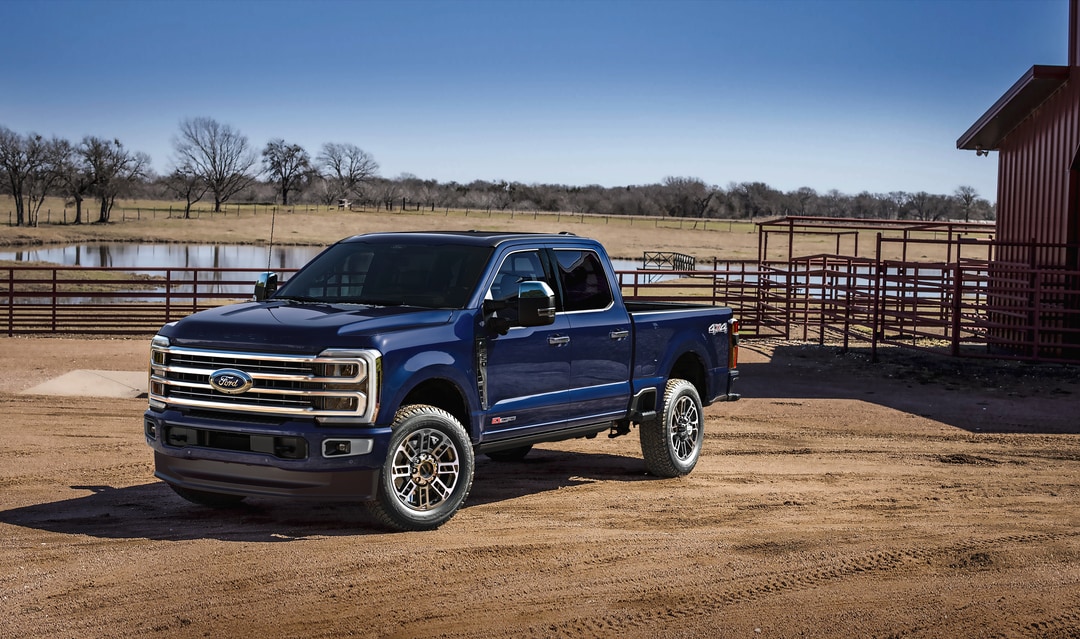
Ford F-250 Super Duty: Heavy-Duty Capability With Daily Usability
The Ford F-250 Super Duty is often the entry point into heavy-duty ownership. It’s a strong fit for drivers who need more capability than an F-150 but still want a truck that’s comfortable and manageable day to day. For many Western NC and Upstate SC buyers, the F-250 is the right answer when towing is real—but not constant or near the top of the heavy-duty spectrum.
Who the F-250 fits best
- Light to moderate equipment haulers
- Bumper-pull trailer owners
- Contractors with manageable payload needs
- RV owners towing mid-size campers
- Landowners who need capability without maximum size
Strengths of the F-250
The F-250 can be configured to handle serious work. Many buyers appreciate its balance: heavy-duty capability without the feeling of stepping into the most specialized setup in the lineup. The truck can be easier to park, easier to live with, and often less expensive to operate than moving up in capacity.
The most common F-250 limitation: payload margin
Here’s what we see repeatedly: shoppers buy an F-250 because the towing number looks like it covers their trailer. Then real life happens: the family rides along, the bed gets loaded with gear, the hitch goes in, and the trailer’s weight transfer adds up. In mountain terrain, that “tight” feeling shows up quickly. If you’re near the edge, you may be happier long-term stepping up to an F-350 for the extra margin.
Best F-250 fit: Bumper-pull towing, moderate payload, and a truck that still feels comfortable as a daily driver.
Ford F-350 Super Duty: The Most Versatile Heavy-Duty Truck (SRW vs DRW)
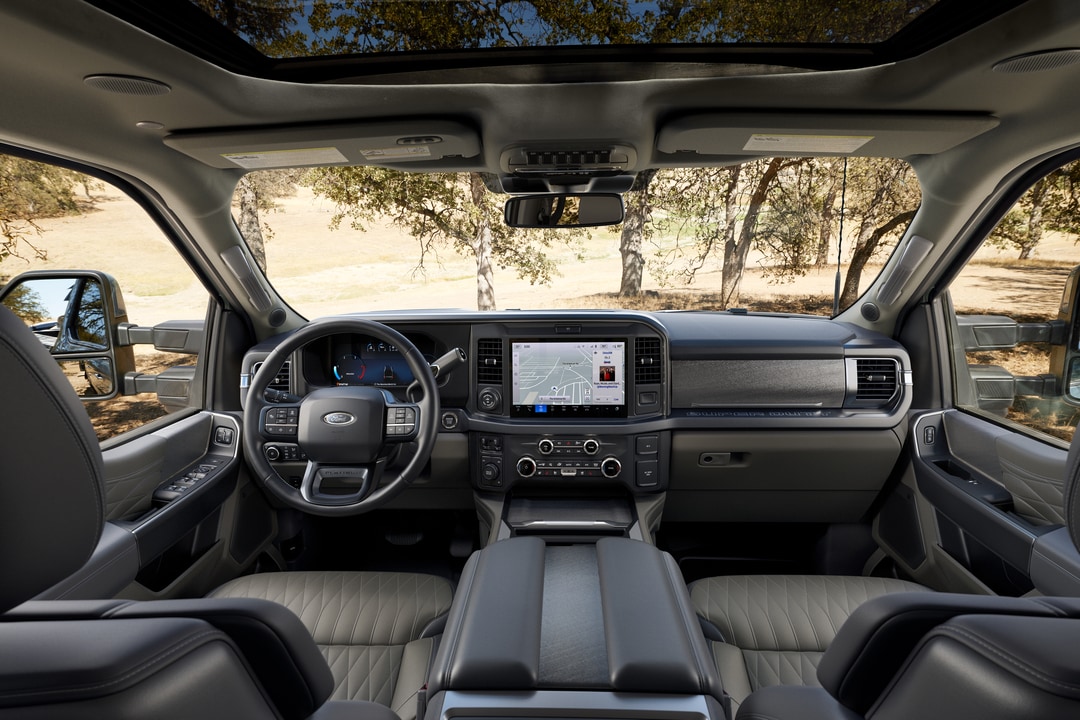
If there’s a “sweet spot” in Super Duty shopping for our region, it’s often the Ford F-350. The F-350 can deliver more payload, more towing confidence, and more long-term flexibility without necessarily feeling like a completely different truck to live with—especially in SRW form. For many buyers, the F-350 is the “buy once, cry once” solution: enough truck now, with headroom for what’s next.
Who the F-350 fits best
- Frequent heavy towing
- Fifth-wheel or gooseneck trailer owners
- Business owners and tradespeople carrying tools/materials daily
- Farmers and landowners running equipment and trailers regularly
- Buyers planning future trailer upgrades
SRW vs DRW: the choice that changes stability
One of the biggest advantages of the F-350 lineup is that it gives you meaningful configuration choice:
| Configuration | Best For | What You’ll Notice |
|---|---|---|
| F-350 SRW (Single Rear Wheel) | Daily driving + heavy towing; owners who want capability with easier parking | More payload margin than many F-250 builds; still feels “normal” day to day |
| F-350 DRW (Dual Rear Wheel / Dually) | Heavy pin weight; big fifth-wheels; frequent heavy hauling; stability-first buyers | More planted feel under load; better stability in crosswinds; confidence on grades |
Why F-350 often wins for fifth-wheel and gooseneck towing
Fifth-wheel and gooseneck towing is where payload margin and rear-end stability become major priorities. Pin weight transfers to the truck, and with passengers and cargo, that can exceed what many shoppers expect. The F-350—especially as a dually—often provides the buffer that makes towing feel composed rather than stressful.
Daily driving considerations
If you commute, park in tighter spaces, or spend most of your time unloaded, an F-350 SRW is often the best blend. If you tow heavy frequently and want the most stable experience, DRW is worth serious consideration. The right choice comes down to your heaviest normal day and how often you live in that “heavy” zone.
Ford F-450 Super Duty: Maximum Stability, Control, and Towing Confidence
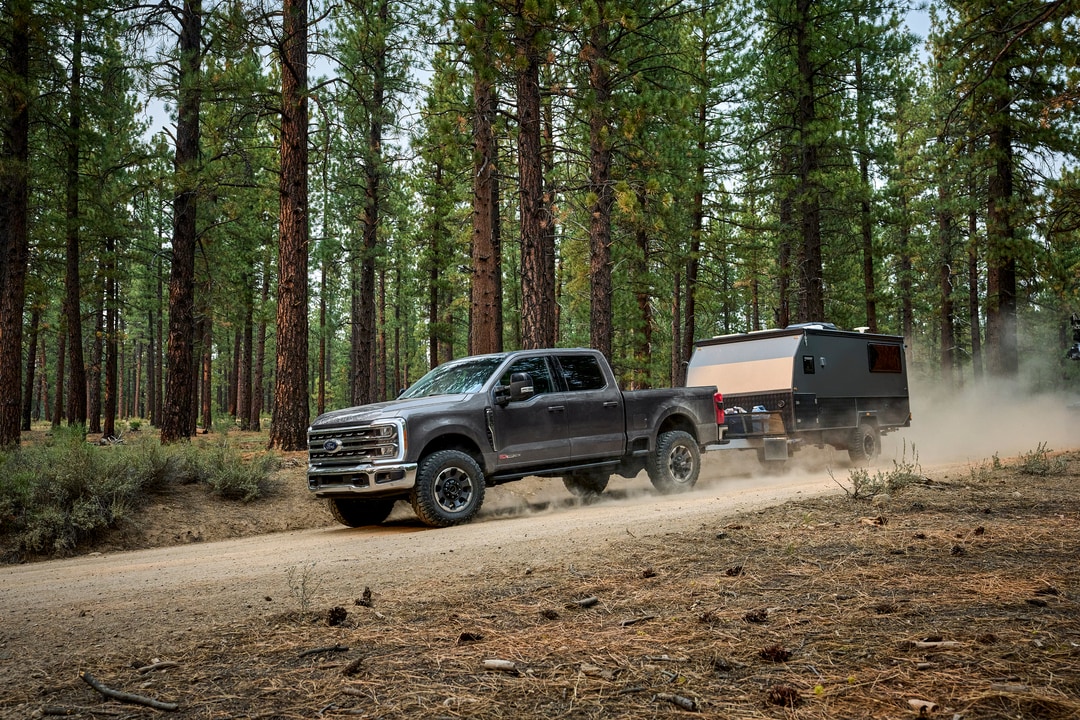
The Ford F-450 Super Duty pickup is built for buyers who prioritize towing control, stability, and confidence above all else. It’s not simply “a little more truck.” It’s a purpose-driven option that shines when towing is frequent, heavy, and central to your lifestyle or business—especially when you’re logging real miles with big fifth-wheels or hauling equipment across changing terrain.
Who the F-450 fits best
- Large fifth-wheel RV owners who tow often
- Horse trailer haulers who value stability and braking confidence
- Heavy equipment transport and frequent long-distance towing
- Buyers who want maximum control on grades and in crosswinds
What you feel in real-world towing
The F-450 is typically chosen by people who know they’re towing a lot—and want the truck to feel settled and sure-footed. When your trailer is large, tall, or heavy, stability is not a luxury; it’s part of safety and comfort. Many F-450 owners describe the experience as less “white knuckle,” especially on windy days and on long descents.
Trade-offs to know before you buy
Because the F-450 is purpose-built, it can feel more specialized: a larger footprint, different tire and maintenance considerations, and a setup that prioritizes towing composure over “easy daily driver” character. If you only tow heavy a couple times a year, an F-350 may be the more balanced choice. If you tow heavy regularly, the F-450 can be a game-changer.
Mountain Towing & Hauling Checklist (Western NC & Upstate SC)
If you tow or haul in our region, these practical checks can help you choose the right Super Duty and enjoy it more once you own it:
Before you buy
- Know your heaviest normal day (loaded trailer + passengers + gear).
- Choose your hitch type early (bumper pull vs fifth-wheel/gooseneck).
- Plan for your next trailer upgrade—if it’s likely.
- Decide whether daily driving convenience or maximum stability matters more.
Before you tow
- Confirm tire pressures and load ratings.
- Use proper hitch setup and weight distribution (when applicable).
- Set brake controller correctly and test at low speed.
- Leave extra braking distance on descents—especially when wet.
Real-World Super Duty Scenarios in Western NC & Upstate SC
To make this decision easier, here are common scenarios we see in our market and how shoppers typically land on the right Super Duty class. Your exact configuration will vary, but these examples show the thinking process that leads to confident ownership.
Scenario A: Bumper-pull equipment trailer + weekend projects
If you’re towing a bumper-pull equipment trailer occasionally—moving a side-by-side, tractor implements, building supplies, or small machinery—an F-250 may be enough, especially if your passenger/cargo load is moderate. The key is to watch payload: passengers + gear + tongue weight add up quickly. If you routinely load the bed and tow at the same time, stepping up to an F-350 can provide more comfort and margin.
Scenario B: Mid-size travel trailer + family + mountain trips
Many families towing travel trailers through Western NC choose an F-250 because it’s comfortable day to day and has real capability. But if your trailer is at the higher end of travel-trailer size, or you load the truck with passengers, coolers, bikes, firewood, and gear, the F-350 SRW can be the smarter long-term fit. It often feels less “worked” on grades and more planted during evasive maneuvers.
Scenario C: Fifth-wheel RV ownership (especially frequent towing)
Fifth-wheel towing is where many shoppers jump from F-250 to F-350 quickly—because pin weight plus passengers and cargo can pressure payload. If you’re towing a larger fifth-wheel, or towing frequently through mountains, F-350 DRW becomes a common recommendation for stability and control. For the most frequent and heaviest fifth-wheel towing, an F-450 can deliver an even more confidence-inspiring towing experience.
Scenario D: Contractor or trades business carrying tools daily
If the truck is part of your livelihood, buying with extra margin is usually money well spent. Tools, materials, racks, and jobsite cargo can keep payload consistently high. In that case, the F-350 often becomes the most practical choice—more buffer, less stress, and better long-term durability. If you tow heavy equipment often as part of the business, you may be in dually territory depending on your trailer and weights.
Scenario E: Farm use + trailers + uneven terrain
Farms and land management tend to combine towing and payload: feed, fencing, implements, livestock trailers, and equipment. Many landowners prefer the F-350 for its flexibility. If you tow heavy livestock or equipment trailers frequently and value stability, DRW can make a meaningful difference.
Not sure where you fit? Bring your trailer details (or the model you plan to buy), how many passengers you carry, and what’s typically in your bed. We’ll help you map it to the right Super Duty class.
Common Super Duty Buying Mistakes (and How to Avoid Them)
Mistake 1: Buying only by “max tow” numbers
Max tow ratings can be impressive, but they don’t automatically reflect your configuration, your cargo, or how your trailer transfers weight onto the truck. Many real-world issues come from payload limitations, not towing limitations.
Mistake 2: Underestimating how fast payload disappears
Add a family in the cab, a full tank of fuel, a toolbox, and the trailer’s tongue or pin weight—and payload can tighten quickly. In the mountains, that translates into more stress on the truck and a less relaxed towing experience.
Mistake 3: Ignoring terrain and frequency
Towing a heavy trailer twice a year is different than towing every weekend. Driving a heavy trailer on flat highways is different than long grades and descents. The more often you tow in challenging terrain, the more you benefit from added stability and margin.
Mistake 4: Overbuying without purpose
Bigger isn’t always better. Overbuying can increase costs and reduce day-to-day convenience. The goal is to match the truck to your real needs and your likely next step, not to chase the biggest badge.
How Stott’s Ford Helps You Choose the Right Super Duty the First Time
At Stott’s Ford in Tryon, NC, we take a use-case-first approach to Super Duty shopping. We don’t start with trim levels. We start with your real life: what you tow, what you carry, how often you do it, where you drive, and how your needs may change.
Use-case-first guidance
We help you translate your trailer and payload needs into the right Super Duty class and configuration—so you don’t pay twice by trading too soon or buying the wrong setup.
Contact Stott’s FordLong-term ownership support
Heavy-duty ownership is a long game. Our team supports you before and after the sale—helping you keep your truck working the way it should for years.
Schedule ServiceWhat to bring for the fastest, most accurate recommendation
- Trailer type (bumper pull, fifth-wheel, gooseneck)
- Trailer model or expected loaded weight
- How many passengers you carry most of the time
- What’s typically in your bed (tools, tanks, cargo, etc.)
- How often you tow and where (mountain grades, long trips, job sites)
FAQs: Ford F-250 vs F-350 vs F-450
What’s the main difference between the Ford F-250 and F-350?
In most real-world use, the biggest difference is payload capacity and available rear-wheel configurations. The F-350 is designed to carry more weight in the truck (including passengers, cargo, and trailer pin/tongue weight) and can be configured as a dually (DRW) for added stability under heavy loads.
Do I need an F-450 to tow a fifth-wheel RV?
Not always. Many fifth-wheels can be handled by an F-350—often a dually—depending on the trailer’s loaded pin weight and your specific truck’s payload rating. The F-450 is often chosen when maximum stability and confidence are priorities for frequent heavy towing.
What matters more: towing capacity or payload?
For many Super Duty shoppers, payload is the limiting factor. Payload includes passengers, gear, cargo, and the tongue or pin weight that transfers from the trailer to the truck. You can be under a max towing rating and still exceed payload if your setup transfers significant weight to the truck.
What’s SRW vs DRW and why does it matter in the mountains?
SRW means single rear wheel; DRW means dual rear wheel (dually). DRW setups generally provide more rear-axle capacity and stability—especially helpful for heavy fifth-wheel towing and for control on steep grades and descents common in Western NC and Upstate SC.
How do I choose the right Super Duty quickly?
Start with your heaviest normal day: trailer type, realistic loaded weight, how much weight transfers to the truck, passenger count, bed cargo, and how often you tow in mountain terrain. If you share those details with Stott’s Ford, we can usually point you to the right Super Duty class and narrow down the best configuration.
Ready to shop Super Duty?
If you’re shopping for a Ford Super Duty in Western North Carolina or Upstate South Carolina, start with the right guidance and the right configuration. We’re here to help you choose confidently.
Browse F-250 InventoryBrowse F-350 Inventory
Browse F-450 Inventory