Ford Fuel System Services in Tryon, NC

Answers First, Then Fuel System Service
Gasoline starts to change the moment it sits, and a vehicle parked for weeks between drives often shows it first in a slow, stubborn start or an uneven idle. At Stott's Ford in Tryon, NC, a fuel system visit begins with measurements, checking running pressure, how well that pressure holds after shutdown and the condition of the fuel in the tank. Our technicians work on all makes and models, including the pickup that only leaves the barn for mulch runs and the convertible saved for sunny weekends. You see the readings and an explanation before any pump, injector or filter is replaced.
Under the Surface of Your Fuel System
Modern gasoline is blended to burn cleanly when fresh, but it begins to oxidize and lose its lighter, easily vaporized parts as it sits in a tank. Fuel blended with ethanol can also absorb moisture from the air over time. A vehicle driven daily burns through its tank long before either change matters, while one parked for weeks keeps the same fuel in its lines and injectors.
Between drives, the delivery side is designed to stay primed. A one-way valve at the pump module keeps fuel from draining back to the tank, and each injector must close tightly enough that nothing seeps past its tip after shutdown. A leak at either end lets the lines empty slowly, and the next start begins with a longer crank while the pump refills them.
- Stale gasoline can leave varnish on injector tips and pump screens, narrowing spray patterns and restricting flow.
- Ethanol blends can attract moisture, and water that settles to the bottom of a tank can reach the pump pickup first.
- A fuel stabilizer added before a long sit slows these changes, though it does not restore fuel that has already gone stale.
- A leaking injector can drip fuel into its cylinder after shutdown, washing oil from the cylinder wall and diluting the engine oil over time.
- Mice and insects sometimes nest near fuel lines and filler hoses on vehicles that sit outdoors or in barns.
Around Tryon, many households keep a second vehicle that sees the road only now and then, such as a pickup used for hauling mowers and mulch or a weekend car stored in a shed. Those vehicles can go several weeks without a full tank cycling through, and fuel complaints on them tend to follow the calendar more than the odometer.
The fuel pump gets blamed for nearly every hard start, partly because it is the part most people have heard of. A weak pump does exist, but it usually reveals itself through low pressure while driving, poor power on hills or stalling under load, not through a slow first start alone. Measuring pressure while the engine runs and again after it sits separates a tired pump from a system that simply loses its prime overnight.
When to Book Fuel System Service
Old fuel and leaking components tend to cause complaints that cluster around the first start after a long sit. Keeping track of how long the vehicle was parked before each rough start gives the technician a pattern to test against.
A puff of dark smoke at startup, a raw fuel smell at the tailpipe or an engine that runs rough for its first few seconds can all point to fuel that seeped into a cylinder while the vehicle was parked. A pump problem, by comparison, tends to show up as hesitation or lost power once the vehicle is moving.
- A long crank once the truck has rested for a while, with quick restarts the rest of the day.
- A shaky idle for the first moments after startup that smooths out once the engine warms.
- Fuel odor in the garage or around the engine bay after parking.
- An engine oil level that seems to creep upward, or oil on the dipstick that smells of gasoline.
Not every hard start on a stored vehicle is a fuel problem. A starting battery low on cranking power, a corroded ground or a slow starter can make the engine crank lazily, and an ignition fault can leave fuel in the cylinder with no spark to light it. Testing cranking speed and spark alongside fuel pressure keeps the diagnosis honest.
An injector that drips after shutdown does more than slow the first start. Fuel washing down a cylinder wall thins the oil film that protects the piston rings, and gasoline gathering in the crankcase dilutes the oil throughout the engine, so finding the leak early protects far more than the starter.
Hands-On Fuel System Care Near Tryon
Each service below targets a different part of the fuel path, from the tank and pump to the injectors that meter fuel into the engine.
Residual Pressure and Prime Retention Test
A gauge is connected to the fuel rail or a test port where the system provides one, and running pressure is compared with the specification. The engine is then shut off, and the technician times how fast the reading drops. A rapid drop leads the technician to isolate the check valve from the injectors by clamping or blocking the line where the design allows. The result shows which end of the system is losing its prime.
Injector Drip and Seal Inspection
Where pressure loss points at the injectors, the rail and injectors can be removed as an assembly on many engines and pressurized over a clean surface to spot any that drip. On engines where removal is impractical, spark plug condition and a scope look inside each cylinder can identify the wet one. A dripping injector is replaced along with its seals, and the others are checked for spray pattern where equipment allows. You see the evidence before anything is ordered.
Stored Vehicle Fuel Assessment
For a vehicle that has sat for a long stretch, a sample of fuel is drawn and checked for water, sediment and the sour smell of gasoline that has gone stale. The filter, where serviceable, and the pump inlet screen on some designs are inspected for varnish and debris. If the fuel is no longer usable, the tank can be drained and refilled before deeper testing so fresh fuel is not judged by old symptoms. Advice on stabilizers and storage habits wraps up the visit.
Following a Fuel Complaint From the Service Lane to the Last Test Drive
The visit opens with questions about how the vehicle is used, such as how long it sits, how old the fuel in the tank might be and whether the hard start fades after the first drive. The technician then checks cranking speed and spark before attaching a fuel gauge, so the fuel system is not blamed for a fault elsewhere.
Near Mill Spring, a pickup that hauls mowers and mulch had sat between jobs for most of the summer, and each first start took a long crank followed by a cloud of dark smoke. A neighbor who works on tractors was sure the in-tank pump was failing, and the owner had already priced a new one. The gauge told a different story, since running pressure met specification yet bled to almost nothing soon after the key was turned off, even with the check valve isolated. One injector was found dripping steadily into its cylinder, and replacing it with fresh seals, followed by an oil change, brought back clean, quick starts.
- Cranking speed, spark and the condition of the starting battery are confirmed first, ruling out causes outside the fuel system.
- Running pressure and volume are measured against the specification for the engine.
- Pressure hold after shutdown is watched, and the check valve and injectors are isolated where the design permits.
- Your advisor walks through the readings, and nothing is ordered until the estimate has your approval.
Following repairs, the system is pressurized, checked for leaks at every connection that was disturbed and put through repeated cold starts where time allows. Pressure hold is measured once more, and a road test confirms smooth power and a quick restart.
Injector and pump parts vary by engine, so the visit is booked with time to confirm the right part numbers before the work begins, and all makes and models are welcome for this testing. Pressure and sample results are often ready before closing, when the schedule and parts allow. Injector or pump work on engines with a buried rail or an in-tank module can stretch longer, and your advisor gives a time frame at check-in.
The Stott's Ford Service Lane for Fuel System Service
A returnless fuel system with a pump driver module is common across Ford vehicles, and that module varies pump speed to hold pressure, so testing on these models includes checking how it commands the pump. Ford service procedures guide how pressure is read at Stott's Ford, and Ford software can display commanded and actual pressure while running the pump on command where the model supports it.
On direct injection Ford engines, a high-pressure pump driven by the engine feeds the injectors, and some EcoBoost engines add port injectors alongside them. On a model such as the Ranger or the Expedition, both pressure circuits are checked before either one is blamed for a hard start.
- On many Ford models, the capless Easy Fuel filler is inspected for a sticking flap or a damaged seal when a fuel smell or an evaporative code is present.
- Older Ford models with an inertia fuel shutoff switch are checked to confirm the switch has not been tripped by a jolt.
- When a part is needed, Motorcraft injectors, filters and pump modules can be ordered to match your VIN.
Find Stott's Ford in Tryon, NC
Local Towns We Handle Fuel System Service For
Between Tryon and Columbus lies Lynn, and the farms and wooded lots out toward Mill Spring are home to many vehicles that work hard for a day and then sit for weeks. Owners from those communities, along with weekend drivers from across the area, bring stored and seldom-driven vehicles to Stott's Ford when the first start of the season turns into a struggle.
- Mill Spring, NC
- Sunny View, NC
- Lynn, NC
- Green Creek, NC
- Union Mills, NC
- Campobello, SC
- Gowensville, SC
- Rutherfordton, NC
Running a seldom-used vehicle regularly and keeping its tank close to full slows many of the changes described above. A fuel check before the busy season confirms the system is ready when the vehicle is needed.
Quick Answers About Fuel System Service
Owners of seldom-driven vehicles usually want answers to these fuel questions before anything else.
Q: How can I tell whether the fuel in my stored vehicle has gone bad?
Q: Why does my truck smoke and run rough for a moment after sitting?
Q: Is a hard start always a sign of a failing fuel pump?
Q: Does fuel stabilizer really help a vehicle that sits?
Q: Can a vehicle from any manufacturer have its fuel pressure tested here?
Knowing roughly how long the vehicle sat and when it was last filled helps the technician judge the fuel.
Any additives or stabilizers you have used are worth naming at check-in.
Schedule Your Fuel System Service at Stott's Ford
Each season a dripping injector or a tank of stale fuel is left alone, the first start gets a little harder. Testing before the busy months protects the engine oil, the catalytic converter and the starter from extra wear.
The pressure readings and fuel sample results are explained before a repair is priced. Pump, injector and filter work are quoted as separate items, so the order of repairs is your choice.
A fuel system visit at Stott's Ford can be requested online or through the service department. If possible, bring the vehicle in on its first start after a long sit, since the fault is easiest to measure then.
Service Specials
Wild Card

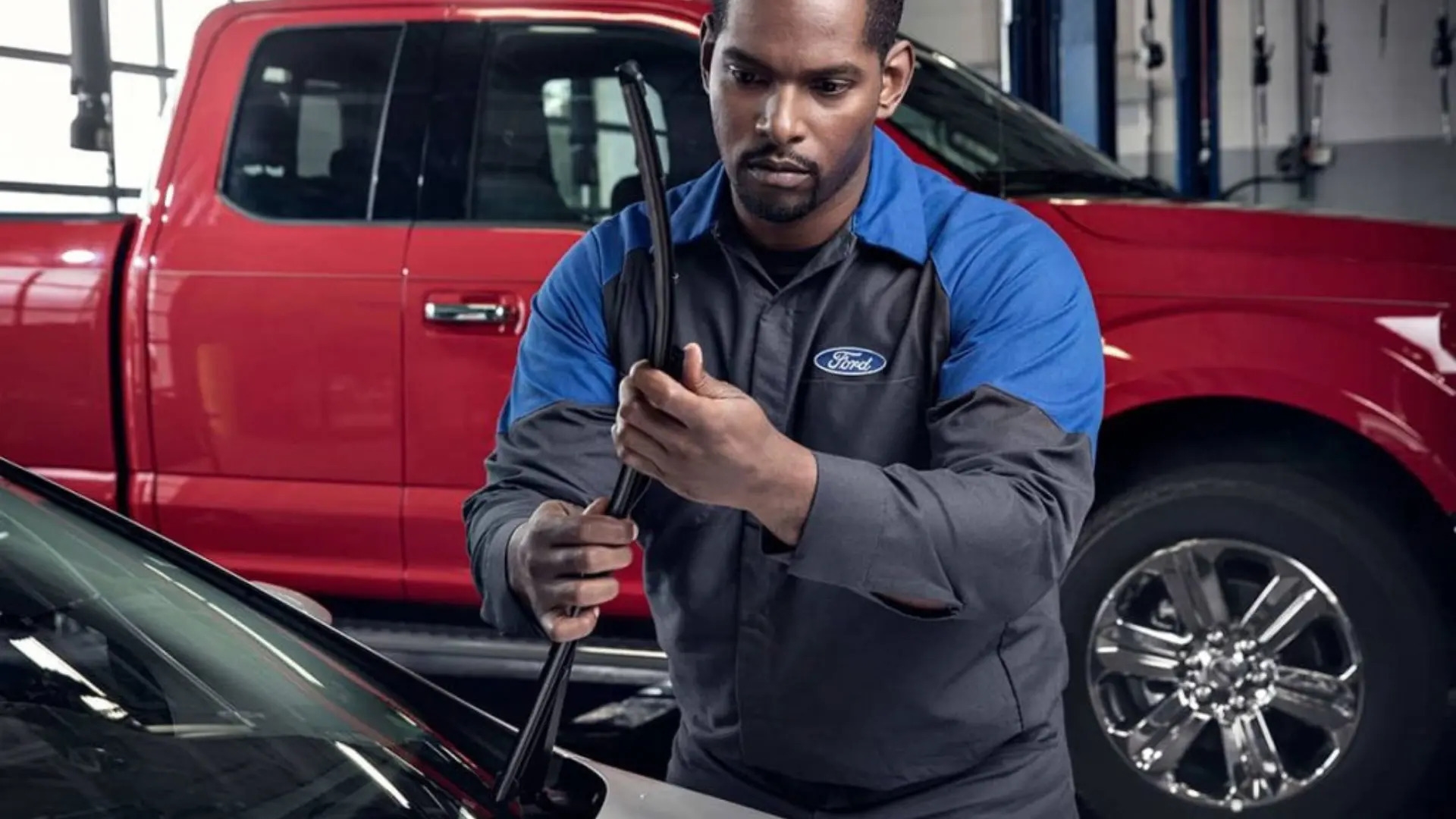
Wiper Blades
Ensure safe driving in any weather with new, high-quality wiper blades. Replace worn or streaking blades today for improved visibility and performance.
Tire Balance & Rotation
Properly balanced & rotated tires can improve tire life, gas mileage, ride comfort and uniform wear. Our trained Technicians will balance, rotate, and infla
Read More
Front or Rear Brake Pads
Replace front or rear pads, inspect discs, calipers, lines, hoses, cylinders, and master cylinder.

Earn and redeem Points on Ford Service with Ford Rewards.*
Ford Rewards members can redeem Points for service and earn 10 Points per $1 spent on eligible Ford Service.**
Join Ford Rewards by downloading the Ford app

Ford Pickup & Delivery
When you need service, your dealer will pick up your vehicle at places like your home or office, service it at the dealership, and deliver it back to you. It's
Read More
Ford Mobile Service
Let your dealer come to you at your home or office to perform routine vehicle maintenance there on the spot. It's complimentary and available at participating d
Read More