Ford Engine Diagnostic Services in Tryon, NC

Something Off With Your Engine Management System? Act Early
Engine trouble that shows up on the commute and vanishes in the driveway is the hardest kind to pin down, and it is the kind the technicians at Stott's Ford in Tryon, NC set out to chase. Diagnosis begins with the stored codes and the misfire counts the engine computer keeps for each cylinder, then moves to tests that recreate the fault. All makes and models are diagnosed in this department, a compact crossover and a high-mileage work pickup alike. You see what was found before any part is replaced, and you approve each step. If the answer needs more than one visit, you hear that up front.
How Tryon Driving Uses Your Engine Management System
A misfire is a cylinder that fails to burn its share of fuel on a given cycle, and the engine computer watches for it constantly. It does this by timing the crankshaft, which speeds up a little with each power stroke and lags slightly when a cylinder does not fire. When the lag repeats often enough, the computer stores a code and, on many vehicles, counts the misses for each cylinder separately.
Those per-cylinder counts are often more useful than the code itself. A code may name a random misfire or a single cylinder, but the counts reveal whether one cylinder misses steadily, several miss now and then, or the misses only appear under load at highway speed. Each pattern narrows the list of suspects before any part is touched.
- Ignition coils on most modern engines sit directly on top of each spark plug, joined to it through a rubber boot that seals out moisture and contains the spark.
- A boot that cracks or loses its grip can let the spark jump to the cylinder head instead of firing across the spark plug gap, especially in damp air.
- Fuel injectors, vacuum leaks and worn valves can also make a cylinder miss, so the ignition system is only one branch of the search.
- A flashing engine warning lamp usually signals a misfire severe enough to harm the catalytic converter if driving continues.
- Some misfires show up only while the engine is cold and others only after it is fully warm, and that timing is a useful clue.
For commuters who live around Tryon and work across the state line, a miss that appears on the morning run south and disappears by the afternoon can be maddening. The vehicle behaves at the shop counter, the lamp clears itself after a few clean trips, and the question of what is wrong carries into another workweek.
Replacing the sensor named in a code feels like the obvious repair, and parts counters sell a great many sensors on that logic. A code describes a test the computer ran and failed, not a part that failed, and a sensor often reports a problem that started somewhere else. In misfire cases especially, a crankshaft or oxygen sensor reading can be perfectly accurate while the real fault sits in the ignition, the fuel delivery or the engine itself.
Common Causes of Engine Trouble
Intermittent faults leave patterns, and noting them before the visit shortens the search considerably. A few details about the weather, the engine temperature and the kind of driving when it happened are worth more than a long description of the feeling.
Moisture is a frequent trigger for ignition misses. Morning fog, a car wash or a rainy commute can let the spark find a path along a cracked boot or a dirty coil, and the miss fades once the engine bay warms and dries. A fault that follows the weather this closely points at the ignition parts before anything else.
- A stumble or shudder on damp mornings that smooths out after several minutes of driving.
- A brief hesitation when accelerating hard up a hill, felt more as a jerk than as a loss of power.
- An engine warning lamp that comes on during a trip and goes out again a few days later.
- A faint snapping sound near the top of the engine with the hood open after dark, which can be a spark escaping a cracked boot.
Other faults can mimic an ignition miss. A tired motor mount or a rough transmission shift can feel like a stumble, and a clogged injector or a small intake leak can cause a real miss on one cylinder that no coil will cure. Data from a road test, along with misfire counts and fuel trim readings, keeps those possibilities in view.
A recurring misfire sends unburned fuel into the exhaust, where it heats the catalytic converter well beyond its normal range. Tracking down a cracked boot or a weak coil early usually keeps the repair modest and protects the converter and the oxygen sensors downstream.
Engine Services for Drivers in Tryon
From a first scan to a confirmed repair, these services follow an engine that runs poorly through each stage of the search.
Stored Code and Misfire Counter Review
The technician connects a scan tool and reads every stored and pending code, the snapshot captured at the moment each one set and the misfire counts for each cylinder where the vehicle reports them. Service bulletins for the engine are checked for known issues that match the pattern. The findings decide which tests come next, so no time goes to parts the data already clears. You receive a plain summary of what the computer recorded and what it means.
Ignition Coil, Boot and Spark Plug Check
Coils and their boots are removed and inspected for cracks, carbon tracks and swelling, and the spark plugs are read for wear and deposits. Where a coil is suspected, it may be swapped to another cylinder to learn if the miss moves with it. An ignition scope or a spark tester can be used where needed to compare coil output across cylinders. Worn or damaged pieces are shown to you before replacements are ordered.
Commute Pattern Road Test
Some faults refuse to appear in the bay, so the vehicle goes out on a drive that copies your routine as closely as possible, from a first start on a cool engine to a sustained pull up a grade or a run at highway pace. A data recorder can capture misfire counts, fuel trims and sensor signals during the drive, so a brief event can be studied afterward. Where the fault only appears after an overnight sit, the vehicle may need to stay so the first start can be watched. The drive ends with a clear answer or a clear plan for the next test.
Our Engine Diagnostics Process, Step by Step
Diagnosis begins with your account of the problem, covering when it happens, how the engine feels and what has been repaired already. A scan follows, and every code and its stored readings go into the file before anything is reset.
A crossover owner who commutes from Columbus toward the Upstate had lived with a stumble on foggy mornings for most of a season, along with an engine lamp that came and went. A previous shop read a code that pointed to the crankshaft sensor and replaced it, yet the shudder returned with the next damp spell. Here the misfire counts put every miss on the same cylinder, and with that coil pulled, a hairline crack in its rubber boot carried a dark carbon track where the spark had been escaping to the head. A new boot and coil ended the stumble, and the original sensor tested within its normal range.
- Codes, snapshot readings and misfire counts are written down first, because a cleared memory hides the trail.
- Visual checks of wiring, connectors, hoses and ignition parts come next, with the engine cold and again warm where needed.
- Pinpoint tests then target the suspects the data supports, from coil output to injector balance to compression.
- The cause, the fix and its price are laid out by your advisor, and no part goes in without your yes.
After the repair, the codes are cleared and the vehicle is driven until the computer reruns its misfire monitor. The counts are read once more to confirm every cylinder is firing cleanly before the vehicle is released.
Leaving the vehicle overnight lets the technician watch a true cold start the next morning, which matters when a fault appears only on the first drive of the day, and all makes and models are welcome. Straightforward faults can often be diagnosed and fixed before the vehicle goes home that evening, when the schedule and parts allow. Intermittent problems can take longer, and your advisor tells you where the search stands at each step.
Ford Training and All-Makes Service at Stott's Ford
Ford diagnostic software reaches deeper than a generic code reader, reading module data and running tests that a parts store tool cannot command. The Stott's Ford service team uses it to view misfire data, compare how each cylinder contributes where the engine supports that test and check for powertrain software updates.
Turbocharged EcoBoost engines, found in many Ford models, ask a lot of their coils and spark plugs, and ignition wear can show up under heavy load sooner than on an engine without a turbo. On a model such as the Escape or the Explorer, spark plug condition and coil boots get a close look whenever a misfire is logged.
- Powertrain software updates that Ford releases for drivability concerns are checked against your VIN where available.
- Motorcraft coils, boots and spark plugs can be ordered by part number when the repair needs them.
- Your VIN is checked against Ford recall and bulletin records for engine running concerns.
Find Stott's Ford in Tryon, NC
Engine Diagnostics Within Easy Reach of Tryon
Columbus is the county seat, and the Polk County Courthouse at its center draws residents from across the area for jury duty, records and appointments. Drivers from Columbus and the surrounding communities, along with commuters who live here and work in the Upstate, bring engine concerns to Stott's Ford when a warning lamp or a stumble needs an answer before the workweek.
- Columbus, NC
- Inman, SC
- Mill Spring, NC
- Boiling Springs, SC
- Landrum, SC
- Rutherfordton, NC
- Chesnee, SC
- Saluda, NC
Writing down when the stumble happens, even in a quick note on your phone, gives the diagnosis a head start. Those notes paired with the stored data often shorten the search considerably.
Your Engine Management System, Explained Through Common Questions
Owners chasing a misfire or a warning lamp tend to ask the following questions first.
Q: Why does my engine stumble on foggy mornings but run fine by the afternoon?
Q: Can a cracked coil boot really cause a misfire?
Q: Should I replace the sensor my code reader named?
Q: What are misfire counts, and why do they matter?
Q: Our second car comes from a different automaker, so can it get the same diagnosis?
Details on the weather, engine temperature and road when the problem appears give the technician a strong starting point.
Receipts for earlier parts swaps help the team avoid repeating them.
Book Engine Diagnostics at Stott's Ford
An intermittent miss tends to become a steady one as a crack widens or a coil weakens. Finding it now protects the catalytic converter and spares you a lamp that keeps reappearing on the way to work.
The data, the test results and any damaged parts are shown to you before a repair is priced. You decide what gets fixed and when.
Use the online scheduler to set up an engine diagnosis at Stott's Ford, or reach the service department by phone. Noting the stretch of commute where the problem shows up helps the technician plan the road test.
Service Specials

Wild Card

Wiper Blades
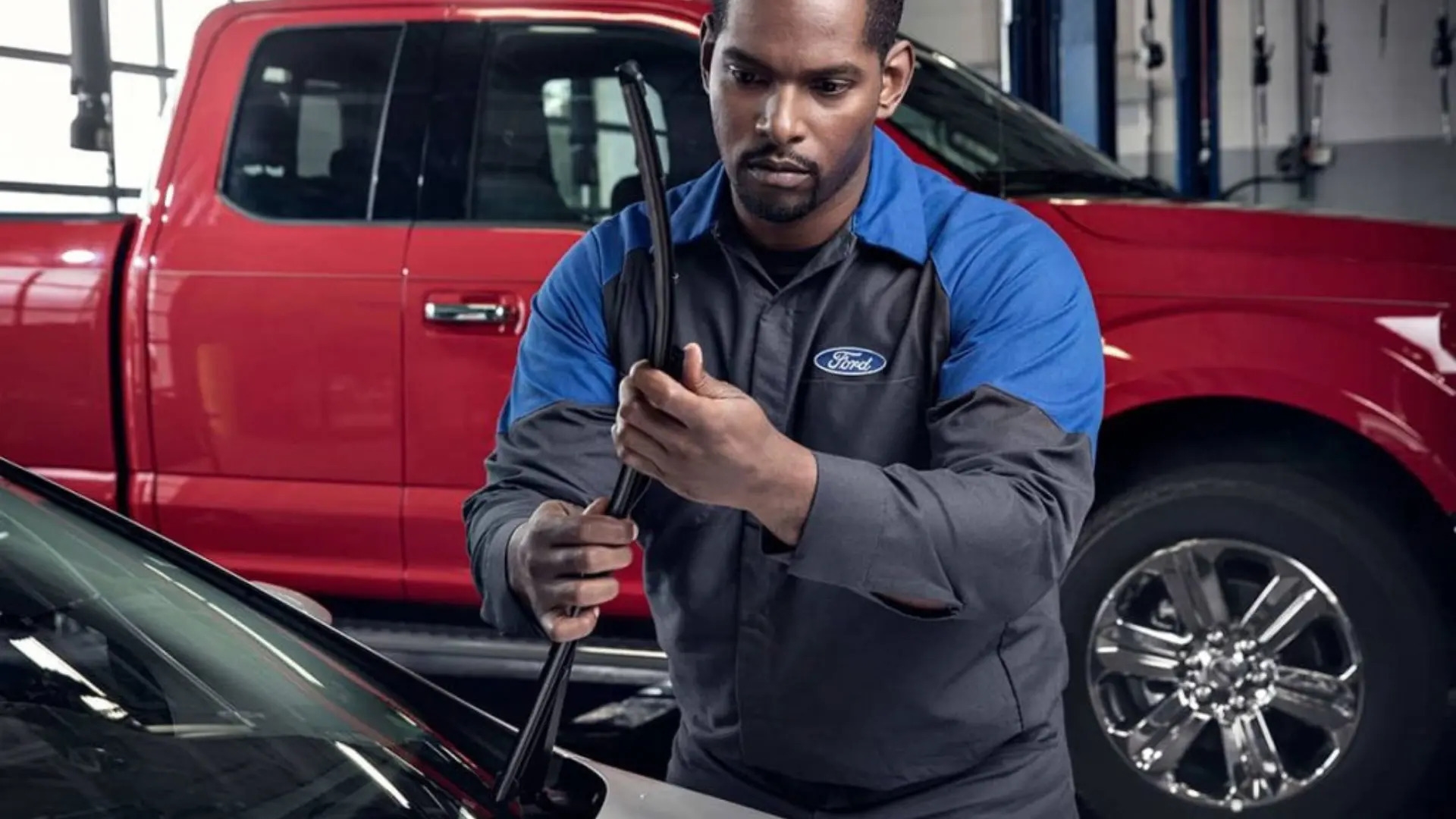
Ensure safe driving in any weather with new, high-quality wiper blades. Replace worn or streaking blades today for improved visibility and performance.

Tire Balance & Rotation
Properly balanced & rotated tires can improve tire life, gas mileage, ride comfort and uniform wear. Our trained Technicians will balance, rotate, and infla
Read More
Front or Rear Brake Pads
Replace front or rear pads, inspect discs, calipers, lines, hoses, cylinders, and master cylinder.

Earn and redeem Points on Ford Service with Ford Rewards.*
Ford Rewards members can redeem Points for service and earn 10 Points per $1 spent on eligible Ford Service.**
Join Ford Rewards by downloading the Ford app

Ford Pickup & Delivery
When you need service, your dealer will pick up your vehicle at places like your home or office, service it at the dealership, and deliver it back to you. It's
Read More
Ford Mobile Service
Let your dealer come to you at your home or office to perform routine vehicle maintenance there on the spot. It's complimentary and available at participating d
Read More