Ford AC Repair Services in Tryon, NC
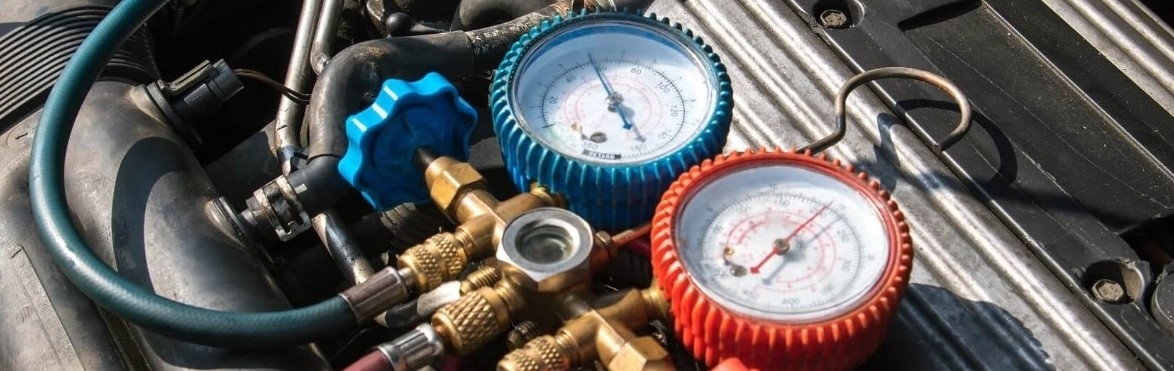
Smooth, Quiet, Predictable: Bring Your Air Conditioning Back to Form
A cabin that sat closed in the summer sun while you shopped downtown can feel like an oven, and the AC has to win that fight quickly when a child or a dog is riding in back. The service department at Stott's Ford in Tryon, NC treats a slow cooldown as a question to answer with measurements before anyone reaches for a part. Our technicians fix cabin cooling on all makes and models, small hatchbacks and three-row family haulers alike. Each visit opens by separating two jobs the system does at once, making the air cold and moving enough of it into the cabin. You get a clear account of which side is falling short, and nothing is repaired until you approve it.
Daily Work for Your Air Conditioning
An automotive air conditioner is really two systems sharing one dashboard. The sealed refrigerant loop, with its compressor, condenser and evaporator, makes the evaporator core cold, while a separate blower fan pushes cabin air across that core and out through the ducts. Cold air that never reaches the vents does nothing for the people in the seats, so airflow matters as much as temperature.
A parked car with the windows up gathers heat in its seats, dash and headliner, and all of that stored warmth has to be pulled out once the engine starts. Engineers call this the pull-down, and it depends on the blower moving a large volume of air while the condenser sheds heat at the front of the vehicle. At walking pace through town, the condenser relies on its electrical cooling fan, since little outside air is forced through it by forward motion.
- The blower motor sits behind the glove box or under the dash on most vehicles, with a resistor pack or a solid-state control module deciding how fast it spins.
- Many three-row vehicles add a rear blower and a second evaporator, so riders in the back can feel warm air even while the front vents run cold.
- Recirculate mode lets the system cool air that is already partly cooled, which shortens the pull-down once the hottest air has been pushed out.
- A cabin filter choked with leaves and grit or a blocked intake under the cowl can starve a healthy blower, cutting airflow with no fault in the motor itself.
- The condenser fan typically runs harder at idle and low speed, and a weak one lets pressure climb until the compressor control backs off cooling.
Short hops between shops, the post office and the school pickup line are hard work for an air conditioner, because each stop lets the cabin heat back up while the condenser has little road air to help it. A system that feels fine on an open highway can fall behind on a humid afternoon of errands with the windows closed and passengers in the rear seats.
Cracking the windows a little is widely trusted to keep a parked car close to the outdoor temperature. Testing by safety groups has shown that a slightly open window does little to slow how fast a closed cabin heats up in direct sun. The interior can become dangerous for a child or a pet within a short time, and the air conditioner then faces a far larger heat load when the engine starts again. A healthy system shortens that recovery, but no amount of AC work makes leaving anyone in a parked car safe.
Small Signs, Bigger AC Repairs
A slow cooldown on hot afternoons is usually the first complaint, often noticed by whoever rides in back. The front vents may feel cold to the hand, yet the cabin as a whole never seems to catch up before the next stop.
Airflow faults and refrigerant faults can look alike from the driver seat, since both leave the cabin warm. The difference shows up in how the air behaves, how the fan sounds at each speed and whether cooling changes when the vehicle is moving or sitting still. Separating them early keeps refrigerant out of a system that may not need any.
- Vent air that feels cold against your hand but arrives as a weak breath even on the highest fan setting.
- A fan that skips speeds, runs only on high or changes speed by itself while the dial stays put.
- Cooling that fades while the engine idles at a red light or in a shopping lot, then comes back once the vehicle gets moving.
- Rear passengers asking for more air on a third row while the front seats feel comfortable.
- A rising hum or a ticking from under the dash that changes pitch with fan speed.
Some warm air has nothing to do with either the blower or the refrigerant. An air mix flap jammed toward the heater side, a temperature sensor reading wrong or a fault in the climate control module can mix warm air into the stream, and those faults turn up in the same testing.
Letting a struggling blower run on can overheat its control module or connector, and a weak condenser fan keeps system pressure high, adding strain to the compressor on every hot drive. Catching the problem early usually limits the repair to one component.
AC Care Available at Stott's Ford
Each card here answers one part of the same question, why this particular cabin stays warm on a summer afternoon.
Heat-Soaked Cabin Pull-Down Test
The vehicle is parked closed until the interior reaches a typical summer heat load, then started with the climate set to full cooling. The technician logs vent temperature and cabin temperature at set points during the pull-down, front and rear where a second blower is fitted. Those readings show whether the system is producing cold air and whether it is delivering enough of it. You receive the numbers in plain language along with what they point to next.
Blower Speed Control and Motor Current Check
A blower that turns slowly or skips settings is tested at every fan speed, with the current it draws compared to what a healthy motor uses. The resistor pack or speed control module and the wiring connector are inspected for heat damage, a common sign of a motor working too hard. The cabin filter and the cowl intake are checked at the same time, since a blocked path can mimic a weak fan. Replacement of the motor, the control unit or both follows only after you approve the findings.
Idle Cooling and Condenser Fan Diagnosis
Cooling that fades in a parking lot and returns on the open road often points to the front of the vehicle. The technician watches high side pressure at idle, confirms the condenser fan switches on when commanded and runs at the right speed, and looks for leaves or debris packed between the condenser and radiator. If the fan, its relay or its control is at fault, that part is replaced and the idle test repeated. Refrigerant service is added only when the gauges and a leak search show the loop is actually low.
The Steps Behind Every AC Repair Visit
A visit starts with a short conversation about when the cabin feels warm, who rides where and whether the fan sounds different than it used to. The technician then confirms the complaint with the doors shut before any gauge or scan tool is connected.
One family SUV came in after a summer of grocery runs with a request to top up the refrigerant, because the kids and the dog in the rear seats never cooled down. At the shop the pressures sat in a normal range for the afternoon, and the center vent air measured cold. The real culprit was a blower motor turning far below its rated speed, worn to the point that only a trickle of air crossed the evaporator. A new blower brought back strong airflow front and rear, and the refrigerant loop was left exactly as it was.
- Vent and cabin temperatures are measured during a closed-door pull-down so the complaint is documented before any work begins.
- Blower speed and current are checked at each setting, with the cabin filter and cowl intake inspected along the way.
- Gauges go on only after airflow is confirmed, and pressures are read at idle and at a raised engine speed with the condenser fan observed.
- Your advisor reviews the results and an estimate with you, and repairs start once you agree to them.
After the repair, the pull-down is run again under the same conditions so the before and after readings can be compared side by side. A road test through stop-and-go conditions confirms the cabin stays cool at low speed as well as on the open road.
A morning drop-off gives the cabin test room to run before midday, and a blower or fan replacement can often be finished by late afternoon when the schedule and parts allow. The AC bay takes in all makes and models, family SUVs and work trucks alike. Should a component need ordering, your advisor tells you at check-in and updates you once it lands.
AC Repair Appointments at Stott's Ford
Climate hardware across the Ford range differs widely by model and year, from single-zone setups to automatic dual-zone control with a rear auxiliary unit on larger SUVs. Technicians at Stott's Ford with Ford factory training pull the correct refrigerant, its quantity and the duct and blower layout from Ford service information, and on many Ford models the diagnostic software can command the blower and read climate module data directly.
On an Explorer or an Expedition fitted with rear climate control, the rear blower and its ducting are checked alongside the front system, so third-row riders get the same airflow as the driver. Specifications are confirmed by VIN before any blower, fan or refrigerant is ordered.
- Motorcraft cabin filters and Ford blower and fan assemblies can be ordered to match your VIN if you want factory parts in the repair.
- While your Ford is in the bay, its VIN is run for any open campaign or published fix that involves the blower, the fans or the climate controls.
- Pull-down figures and replaced parts are logged against your Ford, so a later climate complaint starts from known readings.
Find Stott's Ford in Tryon, NC
Nearby Drivers Who Book AC Repair With Us
Downtown Tryon is a place for parking and walking, whether that means a stop for a photo with Morris the Horse, a lunch out or a round of shopping on a humid afternoon. Cars left closed in the sun during those visits come back to drivers, children and dogs as hot boxes, and owners from around Polk County and over the state line bring that slow cooldown to Stott's Ford for an answer.
- Landrum, SC
- Columbus, NC
- Campobello, SC
- Lynn, NC
- Saluda, NC
- Green Creek, NC
- Mill Spring, NC
- Inman, SC
A slow cabin cooldown is easier to diagnose before the hottest weeks of the year arrive. Testing in early summer gives a weak blower or fan time to be replaced before the season of long errands and full back seats.
AC Care Questions We Hear Often
Here are the cooling and airflow questions summer drivers most often raise at our service desk.
Q: Why is the air from my vents cold but so weak?
Q: Why does my AC cool well on the road but fade in town?
Q: Is it safe to leave my dog in the car with the AC running?
Q: My third-row passengers feel warm air while the front is cold; what could cause that?
Q: Can a car from any manufacturer come in for this cooling test?
A short note on which seats feel warm and at what point in a drive the cooling fades makes the first test more focused.
Mention any recent cabin filter change or refrigerant added at home when you check in.
Schedule a Look at Your Air Conditioning
Blowers and condenser fans that have started slowing down tend to quit outright at the worst moment, often with a full car on a humid afternoon. Testing while the symptoms are mild keeps the repair to a single part.
You see the pull-down readings and blower measurements before any parts are ordered. Each repair is priced on its own, so you decide what gets done first.
Ask Stott's Ford for a cabin cooling test, and note whether the warm air shows up in the front, the back or both. Booking ahead of the first heat wave makes it easier to fit the visit around your week.
Service Specials

Get Up To A $150 Rebate
On These Name Brands: Select Goodyear®, Cooper®, Hankook, Bridgestone, Firestone, Toyo®, Pirelli, Yokohama®, Michelin, BFGoodrich®, and Nitto®

Wild Card

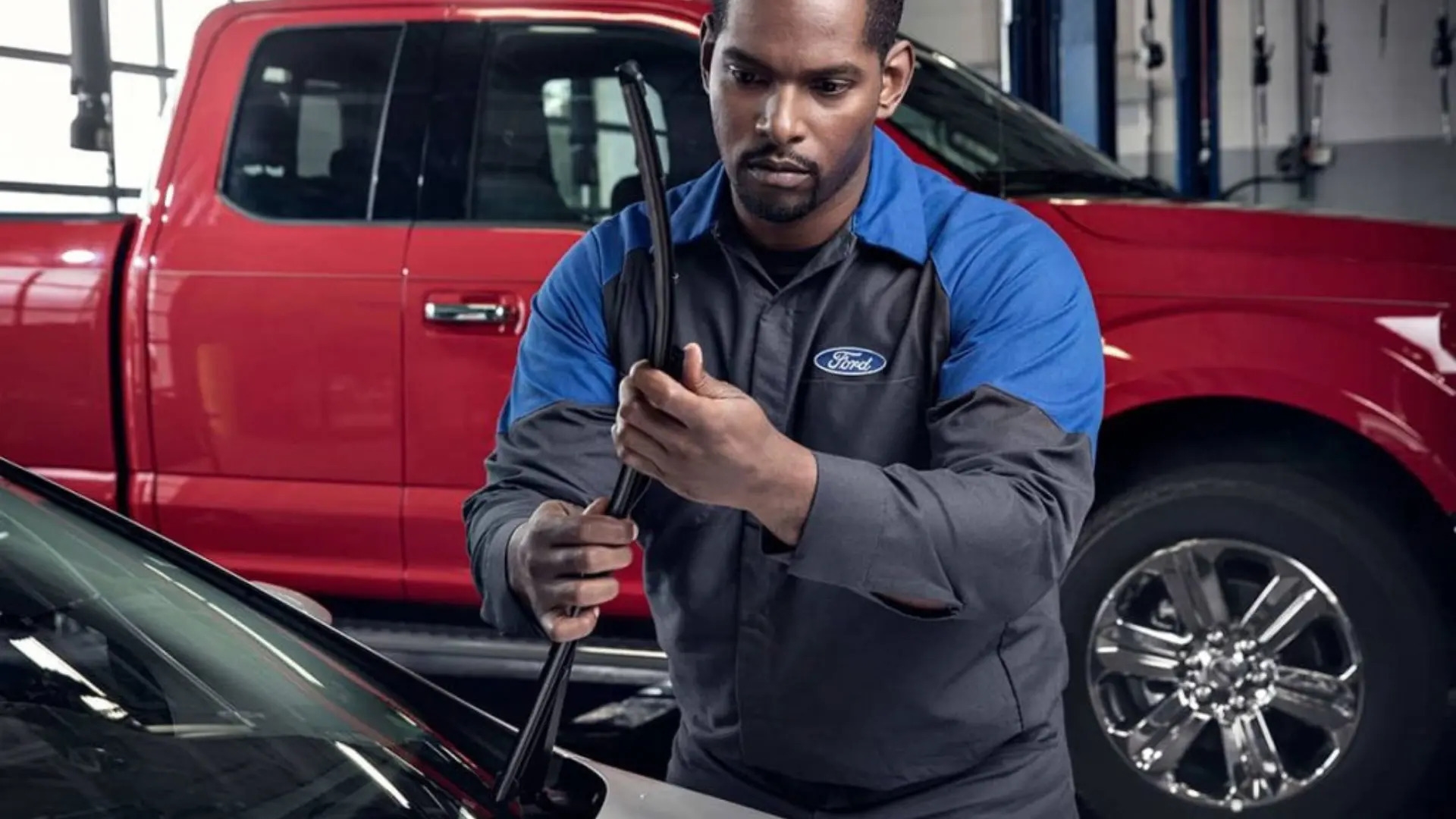
Wiper Blades
Ensure safe driving in any weather with new, high-quality wiper blades. Replace worn or streaking blades today for improved visibility and performance.

Tire Balance & Rotation
Properly balanced & rotated tires can improve tire life, gas mileage, ride comfort and uniform wear. Our trained Technicians will balance, rotate, and infla
Read More
Front or Rear Brake Pads
Replace front or rear pads, inspect discs, calipers, lines, hoses, cylinders, and master cylinder.

Earn and redeem Points on Ford Service with Ford Rewards.*
Ford Rewards members can redeem Points for service and earn 10 Points per $1 spent on eligible Ford Service.**
Join Ford Rewards by downloading the Ford app

Ford Pickup & Delivery
When you need service, your dealer will pick up your vehicle at places like your home or office, service it at the dealership, and deliver it back to you. It's
Read More
Ford Mobile Service
Let your dealer come to you at your home or office to perform routine vehicle maintenance there on the spot. It's complimentary and available at participating d
Read More
Earn 15,000 Points redeemable toward Ford Service with the new Ford Rewards Visa Signature® Credit Card.*
Ford Rewards members who are new cardholders earn a 15,000 Point bonus (up to a $75 redemption value) after making just one purchase with their new Ford Rewards
Read More